

In collaboration with the SHARE Foundation, we found with high confidence that Professor Vladan Đokić, Rector of the University of Belgrade, and prominent supporter of the Serbian student movement, was hacked with NSO Group’s Pegasus spyware in 2026. Additionally, we note that Rade Bajić, who, as a prosecutor, investigated official corruption in a failed project in Belgrade, received an Apple Threat Notification. These notifications are high-confidence indicators of targeting with mercenary spyware such as Pegasus. Our investigations into these cases are ongoing.
This is the first-ever public confirmation of zero-click mercenary spyware delivered via targeted ads. We call the technique AdFection, and show how it was used to infect devices at Al Jazeera with Candiru’s spyware. We also uncover Discover-Tech, and show how the company helps mercenary surveillance vendors track and hack devices around the world.

The plaintiffs, who all worked for the independent and Salvadoran news outlet El Faro, failed to convince the court that their case had jurisdiction in California, according to the judge’s order.
Wikimedia Foundation found “rogue” OpenAI agents on its wikis, raising concerns about risks to its free knowledge projects and the open web.

CrowdStrike Intelligence identified infrastructure associated with a targeted campaign against South Korean financial institutions that resulted in exfiltrated data.
OpenAI, Anthropic and security researchers are investigating tens of thousands of incidents in which their frontier models took steps that outside evaluators would consider problematic, sources told Axios.

The incident is the first known breach to affect a government agency, and Australia's prime minister has vowed to hold OpenAI accountable.

Russian authorities are doubling down on their efforts to quash freedom of expression, including access to information, by increasingly suppressing tools to circumvent draconian censorship laws, Human Rights Watch said today. Virtual Private Networks (VPNs) services face intensifying blocking and takedowns from app stores.
The episode resembled similar hacks by other AI models, but Google said it didn’t consider it an instance of model misalignment

Le quai d’Orsay ne fait pas de commentaires. L’affaire rappelle toutefois le scandale Pegasus, ce logiciel espion développé par la société israélienne NSO qui avait permis de pirater des dizaines de milliers de smartphones.

Ankara believes the attempts were unsuccessful, citing enhanced security measures and encrypted applications

The Administrative Office of the U.S. Courts told TechCrunch that it will start disclosing how many times judges authorized the use of spyware to wiretap suspected criminals.

The SHARE Foundation has confirmed that at least 14 people in Serbia were targeted with advanced spyware since at the beginning of 2026 – the largest documented wave of such surveillance in the country to date. Those targeted include members of the student movement, activists, a member of parliament, and a local councilor, all from […]

In effort to prime chatbots to make pro-Israel arguments the site published 124 reports, over 560,000 words in nine days, Guardian analysis shows
Federal prosecutors charged a man returning to the United States with obstruction because he gave them a passcode that erased his smartphone during a customs search.
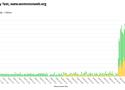
This report documents the blocking of Women on Web (WoW) and Women Help Women (WHW) domains in Italy based on OONI data.
Eight victims of a Greek wiretapping scandal have sued the Athens-based surveillance firm Intellexa SA and individuals believed to be linked to it, seeking €1 million ($1.1 million) each for moral harm, their lawyer said on Tuesday.

“It is a direct attack on the rule of law,” says one European Parliament member of the new findings from Citizen Lab.
From product demonstrations at a secret villa in Rabat to training sessions at NSO’s Herzliya headquarters, Forbidden Stories and its partners retrace the early stages of Morocco’s use of Pegasus.
This technical analysis provides the most detailed view yet into the inner workings of the Pegasus spyware system. This includes confirmation of key technical capabilities such as the infection vectors and methodologies used to infect devices, supported by analysis of internal NSO Group documents, that until now had only been identified via forensic investigations. It also presents new material further validating the accuracy and significance of the dataset underpinning the original Pegasus Project investigation. Finally, this research provides an updated analysis, drawing on previously published Pegasus forensic evidence and newly released materials, to validate the technical methodology used to forensically link Pegasus spyware attacks targeting different victims as originating from the same Pegasus customer.